News!
Video of DeJong Marinelife shows Eclusive Insights into State of the Art Nursery!
Home Blog Blog post 1 In this video, I show you around behind the scenes at one of the world’s leading marine wholesalers—DeJong Marinelife! Amazing

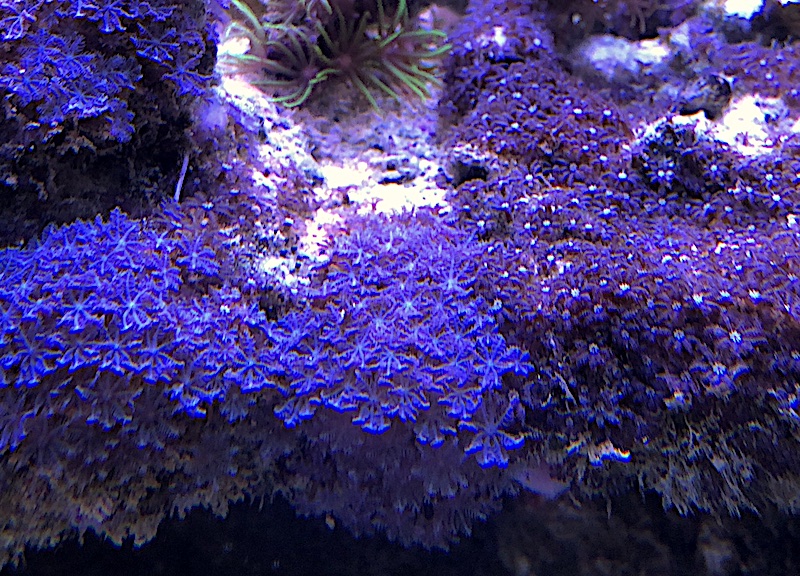 If you’ve spotted a slimy red mat spreading across your sand bed or rocks, you’re not alone. Cyanobacteria—often misnamed “red slime algae”—is one of the most common and frustrating problems in saltwater aquariums.
Though technically bacteria, not algae, this photosynthetic pest thrives in unbalanced tanks and can quickly smother your corals and test your patience. In this article, we’ll dive deep into what causes cyanobacteria outbreaks, how to tell it apart from other nuisances, and the most effective ways to eliminate and prevent it.
Common Name: Cyano, Cyanos, Red Slime Algae
Scientific Name: Various species of Cyanobacteria (commonly Oscillatoria, Phormidium, Lyngbya)
Don’t panic when red slime starts appearing—overreacting does more harm than good. Many new tanks experience short-lived cyanobacteria blooms during their early cycling phase. These often fade as the tank stabilizes. Jumping straight to chemical treatments can backfire, killing beneficial microbes and triggering other problems.
Unless cyanobacteria has persisted for multiple weeks despite good husbandry, give it time. Stick to manual removal and monitor your nutrients and flow. Make small improvements. Most outbreaks resolve as part of natural tank maturation. Reacting too aggressively, too early, can destabilize more than it helps.
Red cyanobacteria appears as a soft, slimy blanket—usually deep red, burgundy, or purple. It often forms bubbles during the day (a byproduct of photosynthesis) and can be siphoned and peeled off in sheets. The keyword to remember is texture: red cyanobacteria feels like gelatin and peels off in mats—classic red slime algae behavior.
Here’s a quick comparison chart to help distinguish red cyano from other common nuisances:
| Feature | Red Cyanobacteria | Green Cyanobacteria | Diatoms | Dinoflagellates |
| Color | Deep red/burgundy/purple | Greenish, teal, or dark | Rusty brown to golden | Brown, sometimes golden |
| Texture | Slimy, gelatinous mats | Slimy sheets or patches | Dusty or powdery film | Stringy, snot-like strands |
| Location | Sandbed, rocks | Sandbed, rocks, glass | Sand, rocks, glass | Everywhere, often mid-water |
| Behavior | Bubbles during daytime | May form bubbles | No bubbles | Disappears at night |
| Removability | Peels in sheets, siphonable | Peels, siphonable | Wipes off easily | Hard to remove, recurs fast |
| Harm Level | Mostly aesthetic/nuisance | Similar to red cyano | Mild, natural phase | Potentially toxic |
Cyanobacteria blooms when conditions in your saltwater aquarium go off-balance. The major culprits include:
New aquariums are especially vulnerable during their “ugly phase”.
While not inherently dangerous, cyanobacteria can become problematic if left unchecked. It is primarily an indicator of imbalance. In moderate to severe blooms, it may:
In most cases, it’s more of a nuisance than a threat. With patience and proper tank tuning, it can be managed or eliminated safely.
– if everything above fails repeatedly –
With a multi-pronged approach, most reefers see major improvement within 1–2 weeks. Complete eradication may take a month. Be consistent—rebound blooms are common if root causes aren’t addressed.
Cyanobacteria might feel like a reefing nightmare, but it’s really a symptom—not a disease. It tells you something’s off in your tank’s balance. Fix the underlying causes, and you’ll not only solve the slime—you’ll build a healthier, more resilient reef.
Remember: a clean, stable, and well-flowing reef is your best defense. Stay proactive, stay patient, and let your reef thrive. 
Home Blog Blog post 1 In this video, I show you around behind the scenes at one of the world’s leading marine wholesalers—DeJong Marinelife! Amazing
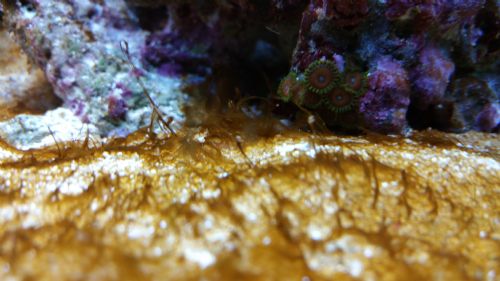
Home Blog Blog post 1 1. 🏷️ Name & Classification Common Name: Dinoflagellates, Dinos Scientific Name: Various species within the phylum Dinoflagellata Type: Unicellular Protists
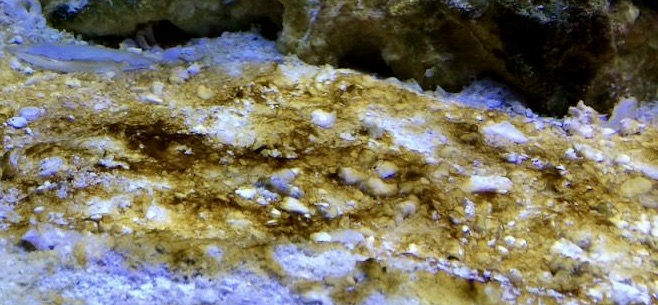
Home Blog Blog post 1 1. 🏷️ Name & Classification Common Name: Diatoms, Brown Algae, Silica Algae Scientific Name: Bacillariophyceae Type: Unicellular Algae (Photosynthetic Protists)